

Shoreline Adaptation – A Living Shoreline at Lake Banook’s Birch Cove Beach
Lake Banook has long been used for transportation by the Mi’kmaq. The original name ‘panuk’ means opening or beginning, referencing the lake’s position at the start of the Shubenacadie (or Sipekne’katik) canal waterway.
Today, the lake is an important recreation site for paddlers, swimmers and others in the local community and beyond.
Lake Banook has also been heavily impacted by development, now bordered on two sides by major roads and surrounded by residential development, and Birch Cove Beach is impacted by increasing erosion. A large goose population has caused water quality issues, as has waste from dogs.
The Living Shorelines Project
Halifax Regional Municipality (HRM) is implementing a living shoreline approach to reduce erosion, provide habitat and improve water quality along a small portion of Lake Banook’s Birch Cove Beach. “[This] was one of the first naturalization projects of this scale to happen under the naturalization program,” said Shauna Doll, Environmental Specialist with Halifax Regional Municipality’s Environment and Climate Change Division.
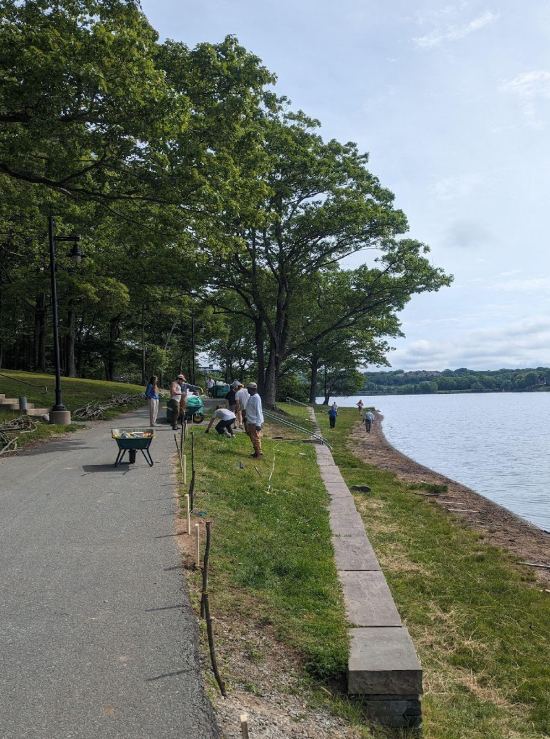
Birch Cove Beach, Lake Banook
Naturalization is an approach to landscape management that fosters a healthy ecosystem.
At Lake Banook, this approach helps manage erosion and stormwater while improving biodiversity and reducing maintenance costs for the municipality, making it an important tool for communities bracing for greater impacts from climate change.
“Naturalized landscapes are inherently low maintenance and self-renewing,” said Doll.
In Lake Banook, the living shorelines project is part of a broader park naturalization strategy that began in 2022, inspired by HalifACT, HRM’s climate change strategy.
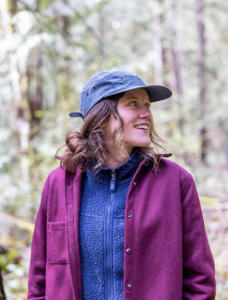
Shauna Doll, Halifax Regional Municipalitiy
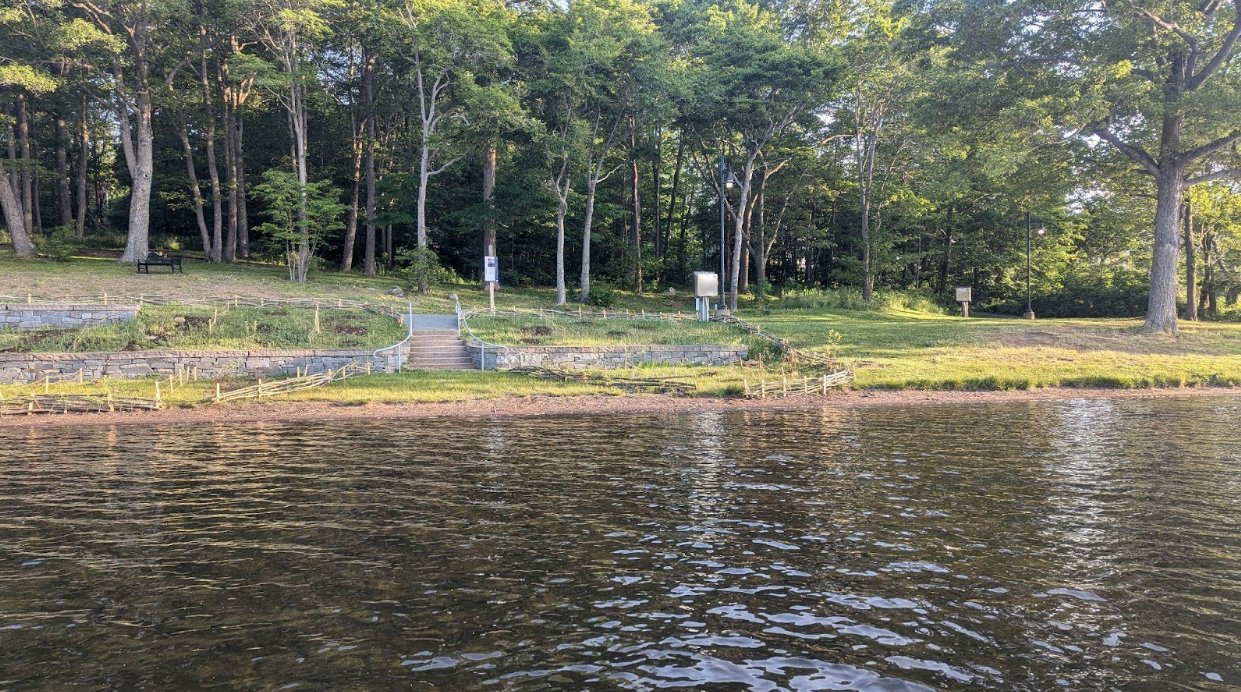
The HRM team worked with the landscaping company Helping Nature Heal in 2024 to erect a wattle fence on the slope around the restoration site. Wattle fences are barriers made in part from living materials. In this location, cuttings from alders were interwoven with live willow stakes.
“It’s a way of creating basically a living fence so that over time…, the living stakes continue to provide the structural integrity of the fencing. It also [helps] trap some sediment, so it can help to build up the soil over time.”
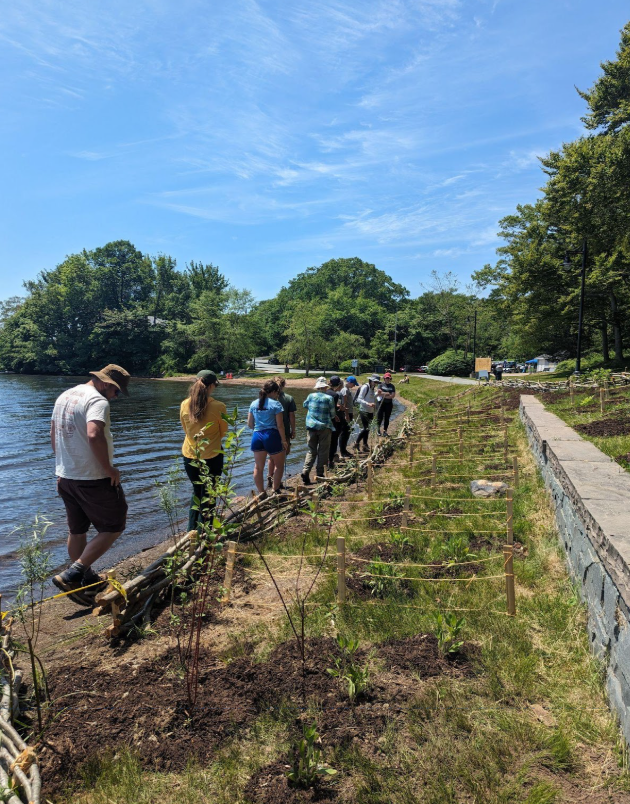
Inside the restoration area, the team planted vegetation to discourage geese from spending time in the area and to restore native biodiversity. “A majority of the plants used were native to the Wabanaki-Acadian forest region,” said Doll. These included speckled alder, low bush blueberry, and swamp milkweed. This vegetation will provide habitat for pollinators and fish and will filter stormwater before it flows into the lake.
Project Provides Connection with Community
Over time, organizers hope the site will require less and less maintenance, as it becomes more established. Throughout that process, it’s important to keep residents informed about the project and other naturalization efforts, Doll said, as this encourages a greater sense of ownership. “That [residents] can learn from [these projects] and help to steward them over time and we can create a bit of a culture of conservation around sites like this.”
Alex Cadel, Climate Services Specialist with Nova Scotia Department of Environment and Climate Change and working in partnership with CLIMAtlantic, said it’s important to work with nature when trying to manage flooding and erosion.
Working with nature also brings co-benefits, such as providing additional habitat and recreational opportunities. “It just creates such a valuable environment for people to enjoy all of the benefits,” Cadel said.
HRM has 32 other sites that need naturalization. For that work, Doll said one of the greatest lessons from the Lake Banook project has been the value of collaboration.
We can’t do it alone. More and more as I dive into this work, there’s just so many sites that need to be restored. There’s so much work that needs to be done and this work is such a true pleasure to connect with the land and to connect with one another.
Additional Resources:
- Nova Scotia Government Climate Change Resources: https://climatechange.novascotia.ca/
- CLIMAtlantic: https://climatlantic.ca/
- Green Shores Program: https://stewardshipcentrebc.ca/green-shores-home/
Funding support provided by:

Recent Comments