
This blog post is based on the content from this video as part of our Adaptation Essentials Webinar series.
What is Climate Change and how does it impact our lives in Atlantic Canada?
Climate change is already shaping daily life in Atlantic Canada and around the world. To understand how to adapt, we must understand what climate change is and how it is developing. It helps to begin with the earth’s climate system.
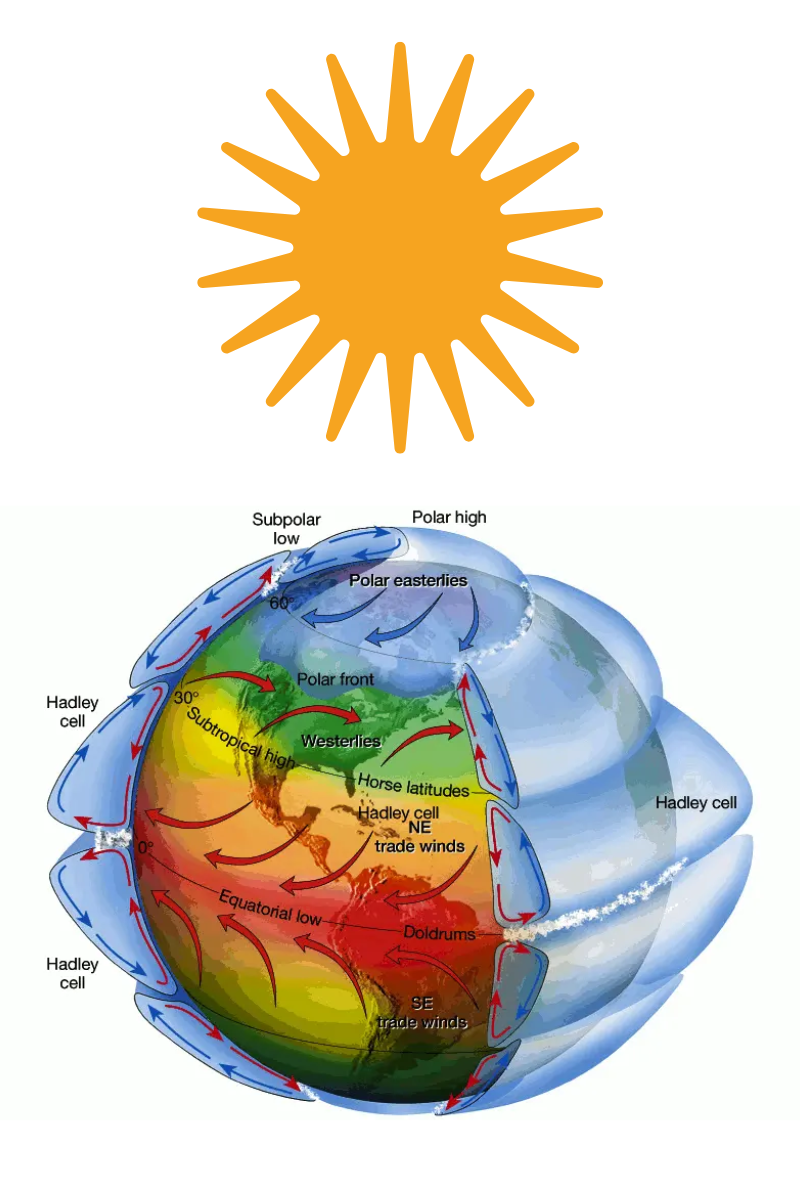
Energy from the sun drives heating and cooling patterns in both the air and the oceans. Since the earth wobbles on its axis, it receives uneven heat from the sun. Differences in heat cause pockets of air to circulate inside our atmosphere. Circulating air interacts with the heat that cycles through our oceans. This interaction can create effects that make our climate erratic year-to-year.
These natural heating and cooling cycles are being upset by greenhouse gases (GHGs) released by humans.
GHGs form a barrier in the atmosphere that trap heat near Earth’s surface. Scientists call these “greenhouse gases” because like a greenhouse, they hold in heat. The extra heat changes Earth’s normal temperature patterns. This causes the global climate to change.
Weather vs. climate
Weather is the day-to-day change in the atmosphere. This is what causes you to wear a rain jacket one day and a t-shirt the next.
Climate is the long-term pattern and average of weather. Think of climate in the context of your entire wardrobe. What might you own if you lived in a country with a warm, dry climate versus a cooler, wetter one? Since our climate is changing across the globe, we must prepare for the impacts.
What does climate change look like in Atlantic Canada?
On average, Atlantic Canada is getting warmer. This leads to a range of direct and indirect impacts.
Direct impacts are measurable changes caused by rising temperatures from increased greenhouse gases. These are likely the impacts you think of first. Rising sea levels, coastal erosion, sea ice loss, and shifting precipitation patterns. It also includes things like more frequent and intense storms. Hurricanes, blizzards, lightning storms and high winds are examples of this. Heatwaves and droughts are also direct impacts.
Climate change also causes less obvious changes to everyday systems we rely on. These are indirect impacts. They are the result of climate change interacting with our human systems. Examples of indirect impacts include our food, housing, and security systems.
When does climate change become a climate impact?
Climate change in Atlantic Canada is not only about adjusting to the weather.
It is important to know that the adjustments we make can cause a chain of effects. These effects can exacerbate climate change.
One example is extreme hot days during the summer. They will become more frequent, which will cause people to use more air conditioning. This will make electricity bills and air conditioning units more expensive. The energy used to power air conditioners involves releasing greenhouse gases. These gases will worsen the greenhouse effect, and the cycle continues.
Other climate change impacts include raising food costs or limited availability of products. Climate change causes more crop pests, limited water supply, and more severe storms. This impacts what foods we have access to.
Of course, not everyone has the luxury of access to air conditioning. This could be because of cost barriers or infrastructure limitations. Many also have a preexisting lack of regular access to healthy and affordable foods. Considering equity is important for avoiding unintended negative impacts when planning for adaptation.
Climate change also causes species loss and ecosystem changes. Shifts in the earth’s climate are happening so fast that this has become a big threat. Species often do not have time to adapt. Or, are so specialized that a slight change is detrimental to their species. Even the slightest change can allow invasive species to thrive in a new environment. Native species, such as ticks in Atlantic Canada, can also take over.
Climate change impacts do not always equal destruction
Warmer temperatures can lead to some opportunities. One example is a longer growing season. This can result in more crop yields. But, this also means we need more resources to keep up with production. More funds for worker wages, energy consumption, and nutritive stress on soil.
Climate change impacts are intertwined. This requires more thoughtful and intentional solutions.
Vulnerability
Not all impacts affect all people equally. It is critical to understand who is most vulnerable to the impacts of climate change. This is how we develop equity-centred adaptation strategies. One can assess vulnerability using the following equation:
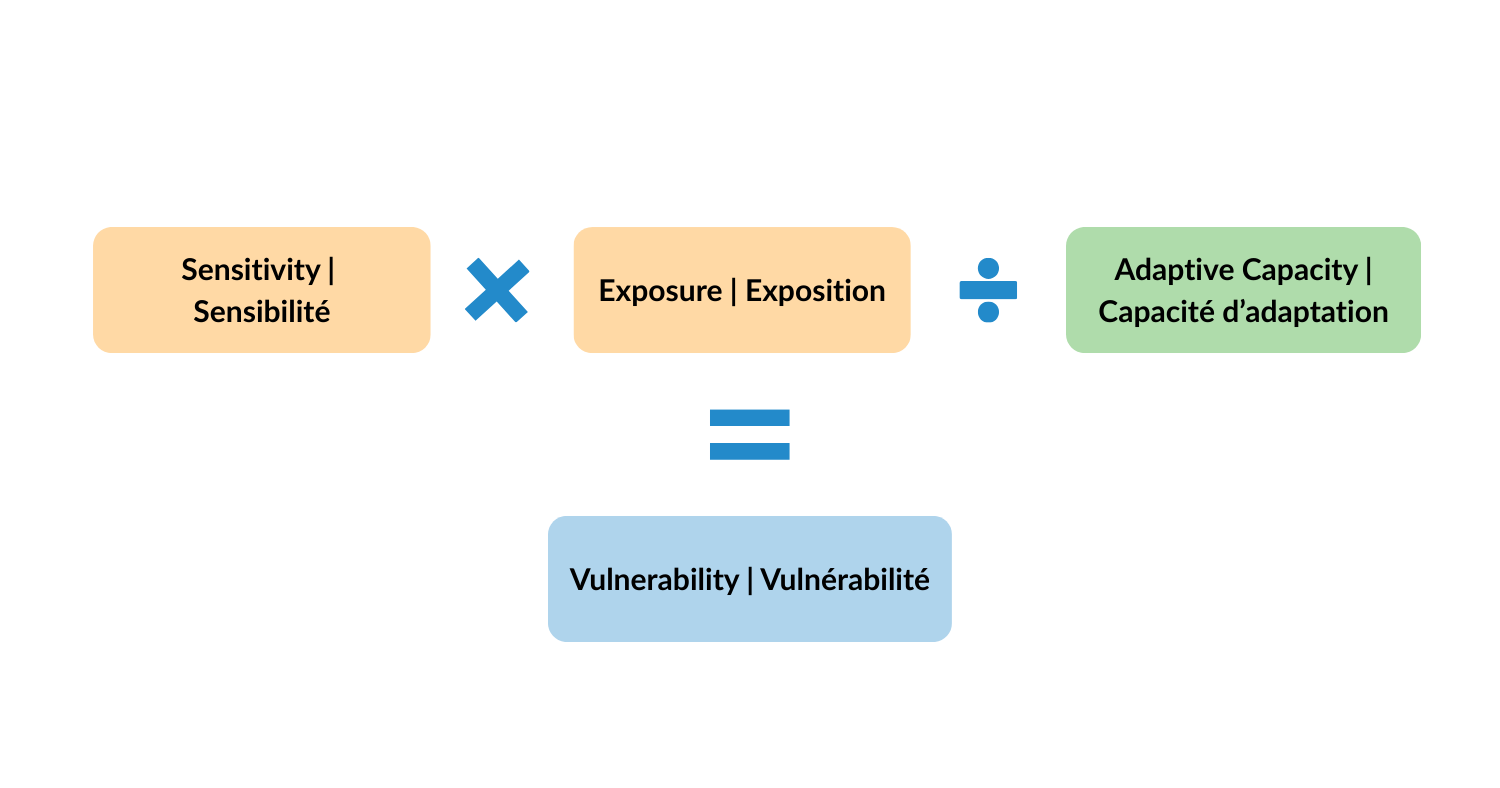
Sensitivity can include one’s ability to regulate temperature. Their sensitivity to heatwaves make them more vulnerable to harm. This includes those more likely to experience decreased mental health. They might rely on support networks that climate events can disrupt.
Exposure may mean that one is living in a flood plain or they spend more time on the land for cultural reasons.
Adaptive capacity means the ability to adjust to possible harm. It means we must take advantage of new opportunities, or respond to changes and effects. These are the skills and strategies to respond to environmental and socioeconomic changes.
Adaptation’s role
Climate adaptation reduces harm to people and the planet. It helps us seize new opportunities. It is not about coping with change. It is about building sustainable communities that can thrive in a changing climate.
Effective adaptation considers the past, present, and future. It supports flexible decision-making that evolves over time. This allows strategies to adjust as conditions change. This approach helps us move toward solutions that are both effective and equitable.
Recent Comments